Australia's Paint Protection Film market grew by over 22% between 2023 and 2025 — yet the single most common mistake we see in our studio audits is not a product failure. It is the wrong installation method being applied to the wrong vehicle. Understanding the difference between pre-cut and custom PPF before you pay the deposit is the difference between a seamless result and a visible edge line that will frustrate you every time you wash the car.
What Is Pre-Cut PPF?
Pre-cut PPF is plotted by computer-aided design (CAD) software and supplied as a ready-made template kit for a specific vehicle make and model. The installer applies each panel section without cutting anything on the car.
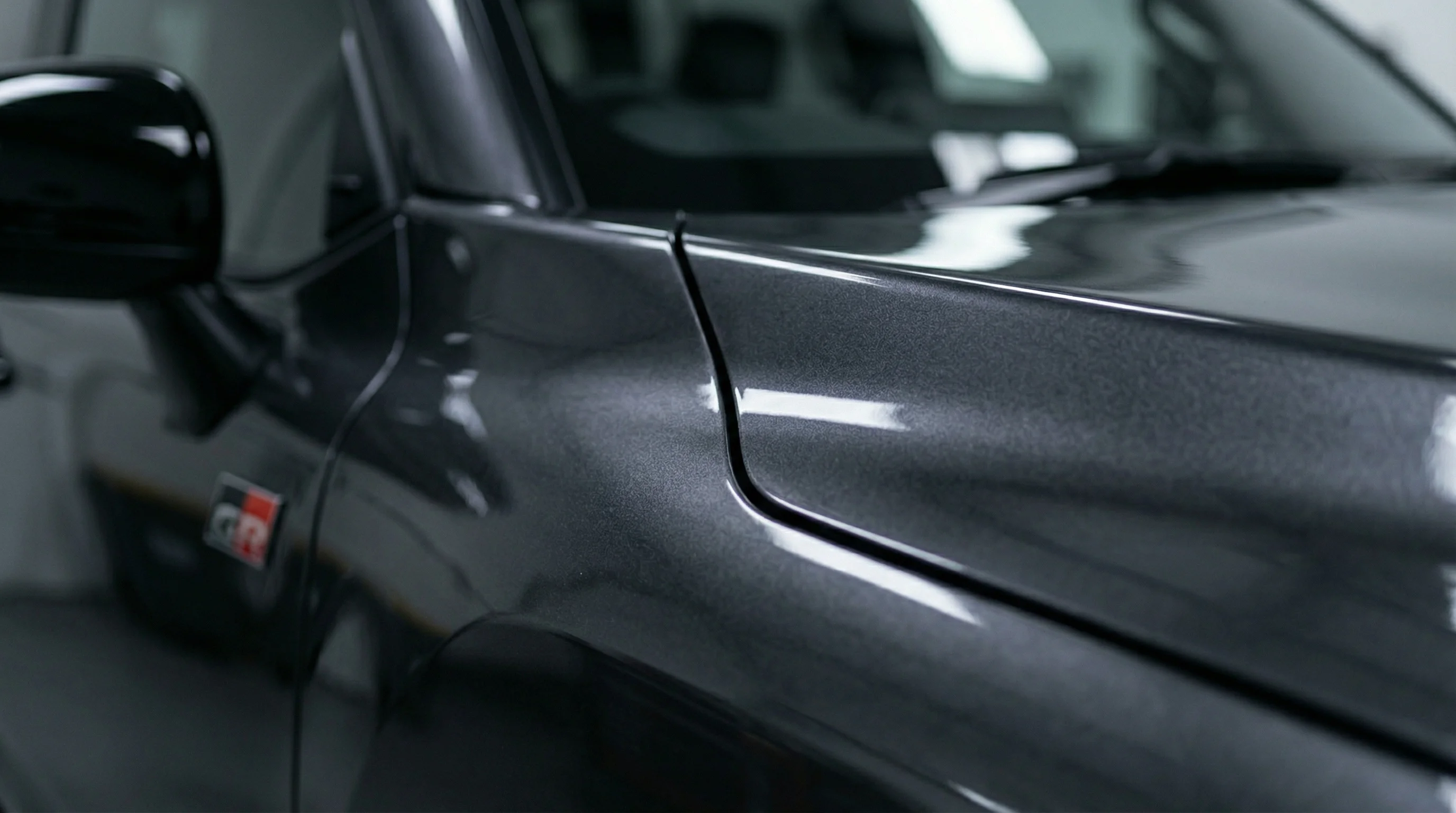
Because the template must pull back slightly from the panel edge to prevent lifting, a thin margin of unprotected paint is always left exposed at door edges, bonnet edges, and front guard extremities. This gap — typically 2–4 mm — is the defining limitation of the pre-cut method. Under normal workshop lighting it is barely visible. Under direct sunlight at a low angle, or after 12 months of accumulated polish residue, it becomes noticeable.
Pre-cut installations on a full front-end package (bonnet, guards, bumper, and mirrors) in Australia average between $1,500 and $2,500 AUD as of 2026.
What Is Custom (Bulk) PPF?
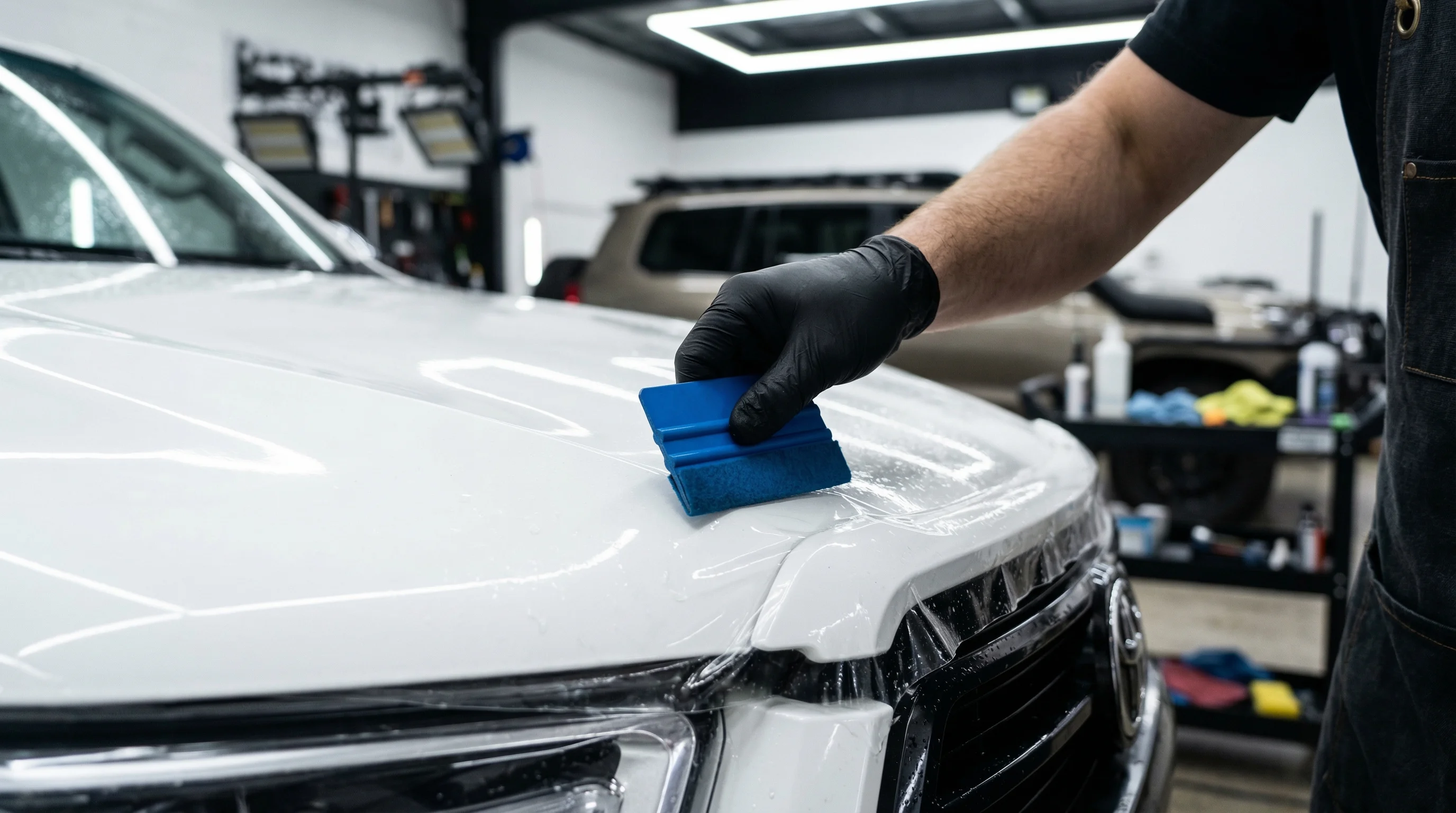
Custom PPF — also referred to as a bulk or wrapped-edge installation — involves laying a full uncut sheet of film over each panel. The installer hand-trims the film on the car, then wraps the excess material around the panel edge and underneath the trim line where it bonds invisibly to the paint.
The result is edge-to-edge protection with no visible termination line. Stone chips, abrasion, and coastal salt exposure are blocked all the way to the physical boundary of the panel. The installation requires removing external trim components — headlight assemblies, door handles, and bonnet surrounds — so the film can be terminally wrapped in areas that are never visible to the eye.
Custom installations on a comparable full front-end package average between $3,000 and $5,500 AUD as of 2026. The price differential is labour-intensive: a custom front-end can take 10–14 hours compared to 4–6 hours for a pre-cut equivalent.
The $3,000 Difference: What You Are Actually Paying For
The cost gap between pre-cut and custom PPF is not product markup. Both methods use the same premium film stock — Xpel Ultimate Plus, Stek DYNOshield, and Llumar Platinum all come in bulk rolls and are also sold as pre-cut kits. What you are paying for in a custom installation is:
Skill and Time
- Manual trimming on a live vehicle requires precision that eliminates error
- Removing and refitting trim components adds 2–4 hours per job
- Edge-wrapping demands experience with heat-gun stretching and adhesion technique
Edge Coverage
- Factory panel edges — the exact point where stone chips are statistically most common — are fully protected
- No exposed paint gap exists around the door's leading edge or the bonnet's trailing edge
Longevity
- A properly wrapped edge does not lift. Pre-cut edges can begin to lift at the film termination point when exposed to the high-pressure wand angles common in Australian coin car washes.
In the Illawarra, Shoalhaven, and Southern Highlands, we have audited studios that offer both installation methods.
View verified PPF installers →
Which Method Is Right for Your Vehicle?
Choose pre-cut PPF if:
- Your vehicle is valued under $40,000 AUD and used as an urban daily driver
- You are targeting stone chip protection for high-impact zones only, not full invisibility
- Your budget ceiling for total PPF coverage is under $2,500
- The vehicle will be replaced within 3–4 years
Choose custom PPF if:
- Your vehicle is valued above $50,000 AUD, is a European brand, or is a prestige second-hand purchase where paint condition is critical to resale value
- You want genuine edge-to-edge protection with no visible film termination
- You intend to add a ceramic coating over the PPF and expect the combined result to look factory-new
- The vehicle is subject to highway driving, unsealed roads, or coastal salt exposure
For any vehicle being professionally wrapped and ceramic-coated as a complete package, custom PPF is the only method that produces a result where no one can tell protection has been applied.
Read more: Vinyl Wrap vs. PPF: Which Protection Do You Actually Need? →
How to Identify a Qualified Custom PPF Installer
Pre-cut PPF kits are designed to make installation accessible to a broader range of technicians. Custom PPF requires a different skill set altogether. When evaluating an installer for a custom job, Verified Detailers audits for:
- Minimum 2 years of documented bulk installation experience
- A controlled, contaminant-free workshop environment (dust causes inclusion defects under the film)
- Authorised dealership accreditation from Xpel, Stek, or Llumar
- A portfolio showing wrapped edge finishing on door apertures and panel extremities
- Current Public Liability Insurance (Certificate of Currency upon request)
An installer who cannot confirm film brand accreditation or who quotes a custom front-end job at under $2,000 should be approached with caution. The material cost alone for premium PPF film on a full front-end sits at approximately $600–$900 AUD, leaving insufficient margin for the labour a quality installation demands.
FAQ: Pre-Cut vs Custom PPF
Can you see the edges on pre-cut PPF?
Yes, particularly in direct sunlight or on dark-coloured vehicles. Pre-cut film terminates 2–4 mm from the physical panel edge. Over time, wax and polish residue accumulates at the film edge, making the termination line more visible. This is a structural limitation of the pre-cut method, not a product defect.
Why does custom PPF cost so much more?
Custom PPF installations require significantly more labour, precise hand-cutting skills, and often involve removing vehicle trim — headlights, badges, and door handles — to wrap the film edges completely out of sight. This process adds 6–8 hours to the installation time compared to a pre-cut kit, which accounts for the $1,500–$3,000 price premium.
Does pre-cut PPF protect as well as custom PPF?
For the panel surface area it covers, yes. Pre-cut film from the same brand and product line delivers identical impact resistance and self-healing performance as a custom installation. The difference is coverage: pre-cut leaves 2–4 mm of unprotected paint at every panel edge, which is precisely where stone chips and road debris make first contact.
How long does custom PPF last compared to pre-cut?
Both use identical film stock and carry similar manufacturer warranties (10 years for premium brands under Australian conditions). Custom PPF, however, typically lasts longer in practice because the wrapped edge does not lift. Pre-cut film termination edges are the most common point of premature delamination, particularly when exposed to high-pressure washing or salt air environments common along the NSW South Coast.
SHARE THIS ARTICLE:

Need a Verified PPF Specialist?
Do not risk your factory clear coat with a high-volume pre-cut kit or an unqualified blade. Get an accurate quote for a custom bulk installation from a Verified Specialist today.
Find a PPF Specialist
Connecting Australia's finest automotive detailers with discerning owners who demand perfection. Quality, verified, and professional.
© 2026 VERIFIED DETAILERS. ALL RIGHTS RESERVED. HANDCRAFTED FOR PROFESSIONALS.