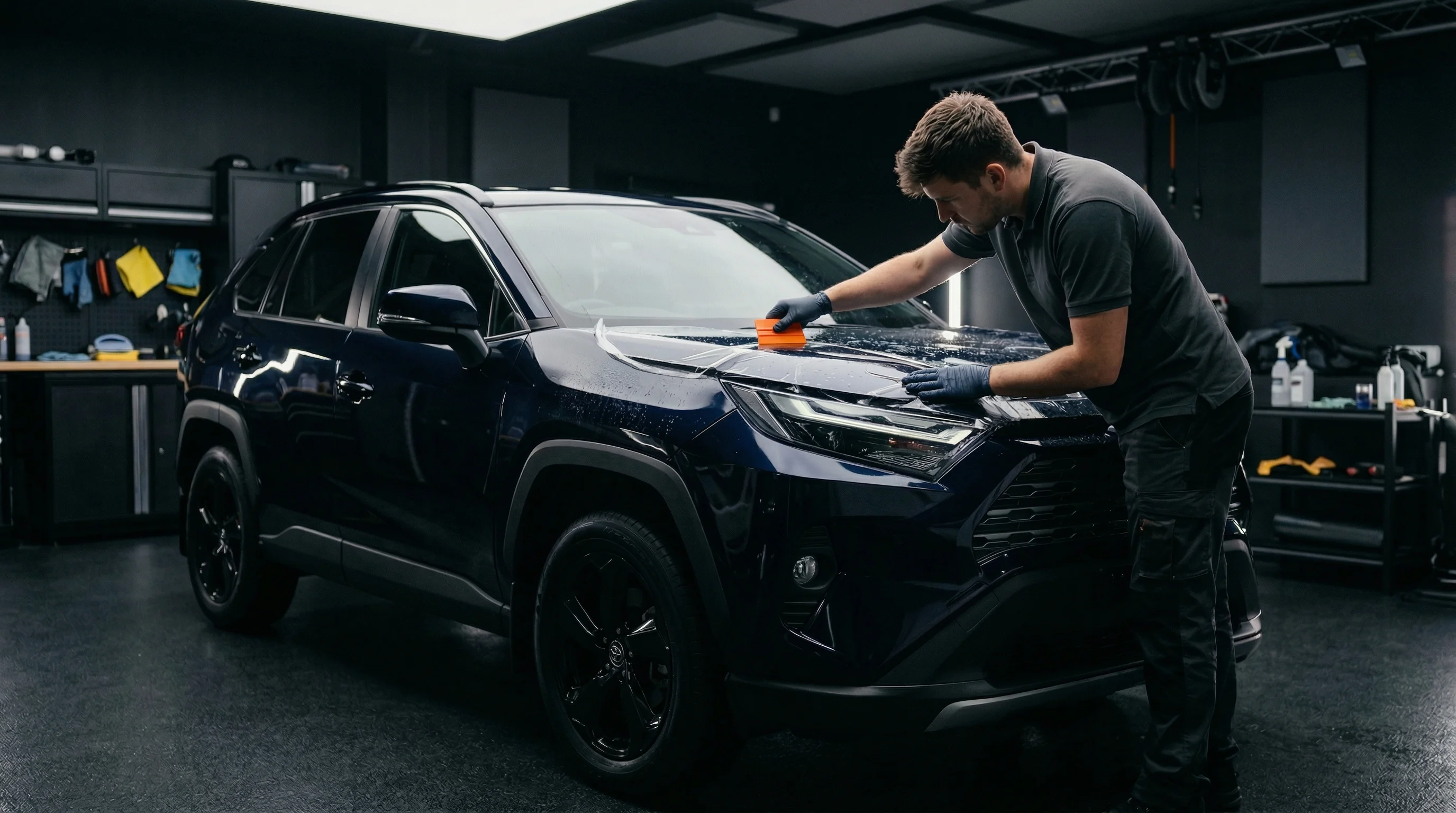
Vinyl Wrap vs. PPF: Which Protection Do You Actually Need?
Verified Detailers | 6 Min Read
back to resourcesAs of 2026, Australians spend over $400 million annually on automotive paint protection — yet the majority choose the wrong product for their situation, either overspending on full PPF coverage they didn't need, or fitting a vinyl wrap to a daily driver and watching it degrade within 18 months.
This guide provides a definitive, product-agnostic comparison so you can make an informed decision before spending between $1,500 and $12,000 on either option.
What Is the Difference Between Vinyl Wrap and PPF?
Paint Protection Film (PPF) and vinyl wrap are fundamentally different products that solve different problems. PPF is a thick, optically clear thermoplastic urethane film designed to absorb physical damage — stone chips, scratches, and minor abrasions — while remaining invisible on the vehicle's surface. Vinyl wrap is a thinner, colour-carrying film designed primarily for aesthetic customisation, providing minimal physical protection.
Both are applied by professional installers using similar squeegee and heat-gun techniques. However, they are not interchangeable, and choosing the wrong one for your primary goal is a costly mistake.
The one-sentence rule: If you want to protect your paint, you need PPF. If you want to change the appearance of your vehicle, you need vinyl wrap.
Is Vinyl Wrap a Form of Paint Protection?
Vinyl wrap offers negligible paint protection compared to PPF. A standard cast vinyl film measures between 70–100 microns in thickness, compared to premium PPF films like Xpel Ultimate Plus or Stek DYNOshield which measure 150–200 microns and feature self-healing topcoats. A stone chip at highway speed will penetrate vinyl wrap and damage the underlying paint. PPF will absorb the impact and, in the case of self-healing films, return to a smooth surface within minutes when exposed to heat.
Vinyl wrap does, however, provide a degree of protection against:
- UV-induced paint fade (the vinyl fades instead of the paint)
- Light surface scuffs from car park doors
- Environmental contaminants during the wrap's service life
For a vehicle being resold within 3–5 years, a full vinyl wrap can preserve the factory paint underneath. For a vehicle driven hard or parked outdoors, PPF is the appropriate choice.
PPF vs. Vinyl Wrap: Direct Comparison
PPF at a Glance
- Primary Purpose: Physical paint protection — absorbs stone chips, scratches, and road debris
- Thickness: 150–200+ microns (self-healing polyurethane topcoat on premium films)
- Stone Chip Resistance: Excellent
- Colour Change Capability: Limited — clear gloss, matte, and satin finishes only
- UV Protection: Excellent — UV-stabilised topcoat rated for 10+ years
- Lifespan (Australian conditions): 8–12 years
- Average Full-Car Cost (AUD): $5,000–$12,000+ (as of 2026)
Vinyl Wrap at a Glance
- Primary Purpose: Aesthetic customisation — colour change, finish change, branding
- Thickness: 70–100 microns (no self-healing capability)
- Stone Chip Resistance: Minimal — will not prevent chip damage to underlying paint
- Colour Change Capability: Extensive — 1,000+ colours, textures, and finishes
- UV Protection: Good — the vinyl fades instead of the factory paint
- Lifespan (Australian conditions): 3–7 years
- Average Full-Car Cost (AUD): $2,500–$6,000 (as of 2026)
Which Is Better for a New Car?
For a new vehicle valued above $50,000 AUD, PPF is the strongly recommended choice. In our audits, vehicles with full-front PPF installations maintained factory paint condition significantly better than unprotected vehicles of comparable age and mileage. The investment in PPF on a new luxury or European vehicle effectively insures the paint surface for the duration of ownership.
For a new vehicle valued below $40,000 AUD used primarily for urban commuting, a quality ceramic coating often delivers better value than either PPF or vinyl wrap.
The exception: if you are changing the colour or finish of the vehicle for aesthetic purposes, vinyl wrap is the only product that achieves this without a full respray.
Which Lasts Longer in Australian Conditions?
PPF consistently outperforms vinyl wrap in longevity under Australian climatic conditions. The Australian UV index regularly exceeds 11 (Extreme) across NSW, Queensland, and Western Australia, which accelerates the degradation of both products. Premium PPF films from Xpel, Stek, and Llumar are engineered with UV-stabilised topcoats rated for 10+ years in high-UV environments.
Factors that reduce vinyl wrap lifespan in Australia:
- Direct sun exposure without undercover parking
- Salt air environments (coastal areas like Wollongong, Kiama, and the South Coast)
- Pressure washing with incorrect nozzle angles
In the Illawarra and Shoalhaven, we have audited studios that specialise in both PPF and vinyl wrap installations across all conditions. View verified PPF and wrap installers →
A vinyl wrap installed in a coastal region without regular maintenance should be budgeted for a 3–5 year replacement cycle. PPF in the same conditions, maintained with ceramic coating, will typically last 8–10 years.
Can You Apply PPF and Vinyl Wrap Together?
Yes — this is the premium approach used on high-end builds. The correct application sequence is:
- Apply PPF to high-impact zones (full front, rocker panels, door edges)
- Apply vinyl wrap over the top for colour change on low-impact areas
- Apply ceramic coating over both films for added hydrophobic protection
This combination provides the complete protection and customisation package. It is the specification we recommend for modified vehicles, track-day cars, and vehicles being prepared for long-distance touring.
How to Choose the Right Installer
Regardless of which product you select, the quality of the installation is as critical as the quality of the film. A premium Xpel film installed poorly will fail faster than a mid-range film installed by an accredited, experienced technician.
When evaluating installers, Verified Detailers audits for the following:
- Documented PPF or vinyl wrap installation training
- Public Liability Insurance (Certificate of Currency, verified)
- Controlled installation environment (contaminant-free workshop)
- Film brand accreditation (authorised Xpel, Stek, or Llumar dealer)
- Portfolio of completed work with legible film edge finishing
In the Illawarra, Shoalhaven, and Southern Highlands, we have audited studios that meet these standards. View Verified PPF and Wrap Installers →
FAQ: Vinyl Wrap vs. PPF
Does vinyl wrap protect paint from stone chips?
No. Standard vinyl wrap measures 70–100 microns in thickness and will not prevent stone chip damage to the underlying paint. Paint Protection Film at 150–200 microns with a self-healing polyurethane topcoat is the correct product for stone chip protection. Vinyl wrap is designed for aesthetic customisation, not physical impact resistance.
Can you wrap a car that already has PPF on it?
Yes. Vinyl wrap can be applied over existing PPF. The PPF acts as a protective base layer and the vinyl wrap sits on top. Ensure your installer has experience with layered film applications.
Which is cheaper to remove — PPF or vinyl wrap?
Both are comparable in professional removal cost. Vinyl wrap is generally slightly quicker to remove due to its thinner construction. DIY removal of aged or degraded PPF can cause adhesive transfer and paint damage and is not recommended.
Is PPF worth it on a second-hand car?
PPF is worth installing on a second-hand vehicle if the existing paint condition is sound, the vehicle is valued above $30,000, and you intend to own it for more than 3 years. A professional paint correction service before installation is strongly recommended.
SHARE THIS ARTICLE:

Find a Verified PPF or Wrap Specialist Near You
Find a Verified PPF or Wrap Specialist Near You Par CTA: Our directory lists every detailer across the Illawarra, Shoalhaven, and Southern Highlands. Filter by Verified status to find a specialist who has been independently audited for training, insurance, and authorised film brand accreditation
View Verified Installers
Connecting Australia's finest automotive detailers with discerning owners who demand perfection. Quality, verified, and professional.
© 2026 VERIFIED DETAILERS. ALL RIGHTS RESERVED. HANDCRAFTED FOR PROFESSIONALS.